
So you want to learn French? Don’t panic. It’s never too late to start.
I started learning French in 2020. Six years later, I speak confidently at an upper-intermediate level.
What does that mean? In everyday life I no longer translate in my head. I can hold complex conversations, though my vocabulary still has gaps and I occasionally slip into Franglais.
What language do you speak?
If English is your only language, you are starting from zero. Expect to make mistakes and to sound like a toddler at first. You are rewiring your brain to respond in a completely new system, and that takes time.
If you already speak Spanish, Italian or Portuguese, you have a head start. French shares vocabulary and grammar with other Latin languages, and the crossover becomes obvious the further you progress.
If you studied French in school, even years ago, you likely retain more than you think. Write down every word or phrase you can remember. That is your starting point.

The Honest French Timeline
When I first moved to France, I was impatient and embarrassed by my poor French. I asked my husband, who moved here at 14, how long it would take to feel comfortable. He was brutally honest: I would feel like a beginner for a long time and I would always be learning.
This was the timeline he gave me, based on nearly two decades of full immersion in France.
First Year – “You’ll feel rubbish. You’ll learn a lot.”
After one year, you can navigate basic life in France with difficulty. You understand common expressions and can communicate immediate needs in simple terms.
I was testing at B1 but still struggled in conversations, especially in groups or on the phone. At every stage, comprehension outpaces speaking.
Second Year – “You’ll still feel rubbish but you’ll understand everything.”
By year two, you understand most familiar topics and can handle everyday situations in French. You can describe experiences and give basic explanations for your opinions.
At this stage, you can work in France if the job matches your language level. Spontaneity begins to develop.
I understood almost everything but couldn’t respond as quickly or precisely as I wanted. This stage can last longer than you expect.
Level B1/B2
Third Year – “You’ll finally start to feel comfortable.”
At this point, you can understand the main ideas in a complex text. Interactions with native speakers begin to feel spontaneous and fluent. This is when you feel confident to handle business in person and over the phone, from banks and insurance to professional conversations at work.
I could express my ideas in social, academic and professional settings without constantly searching for words.
Level B2/C1
Fourth Year – “After four years you’ll be alright.”
It wasn’t until after living in France for four years that my husband said he finally felt fluent. And this was with full immersion: school, work in his parents’ shop and only French-speaking friends.
By year four, you read long texts with ease, understand nuance and tone and speak fluently and spontaneously. You rarely need translations.
Level C1/C2
Practical Ways to Accelerate Your French
Ideally, you start in France. If moving isn’t possible, make it your regular travel destination. Consider immersion courses or, if you are a student, studying abroad.
If you cannot come to France, then look for local language exchange groups like BlaBla Language Exchange and start speaking with native French speakers on a weekly basis.

The only way to learn is to speak. Talk about everything and anything you can. Talk about anything you can. Ask questions. Accept awkwardness.
I created situations that forced me to speak: asking for help in shops, requesting measurements, buying international stamps. The point was simple: speak, even when it felt uncomfortable.
Language Learning Sites
Apps like Duolingo, FluentU and Babbel are useful for rebuilding basics and reinforcing vocabulary. Think of them as support tools, not fluency makers.
French Audiobooks
Listening was my most effective learning tool.
These recommendations work at every level. Others repeat the same beginner lessons over and over but these are three that genuinely helped me progress.
The Michael Thomas Method – A structured audio course that feels like sitting in on a private lesson. No memorisation, just guided logic. Excellent foundation.
French Today – I found Camille and her ‘A Moi Paris‘ method while struggling to find an audio book for an intermediate learner. Clear, detailed grammar explanations with strong intermediate material. You can also find immersive French homestays on her website.
Français Authentique – For full immersion. Entirely in French, with structured levels. Johan also teaches online and hosts a podcast.
French Lessons
Classroom learning wasn’t for me. I learned more through immersion than in a room full of other beginners. But if you need structure or certification, formal lessons are valuable.
Textbooks
There was only one book that I used while learning French because it provided everything I needed. Easy French Step-By-Step: Master High-Frequency Grammar for French Proficiency–Fast. By Myrna Bell Rochester.
This is a serious book and requires discipline. It took me nearly a year to complete, working through every exercise. Grammar matters. Without it, spontaneous speech is extremely difficult.
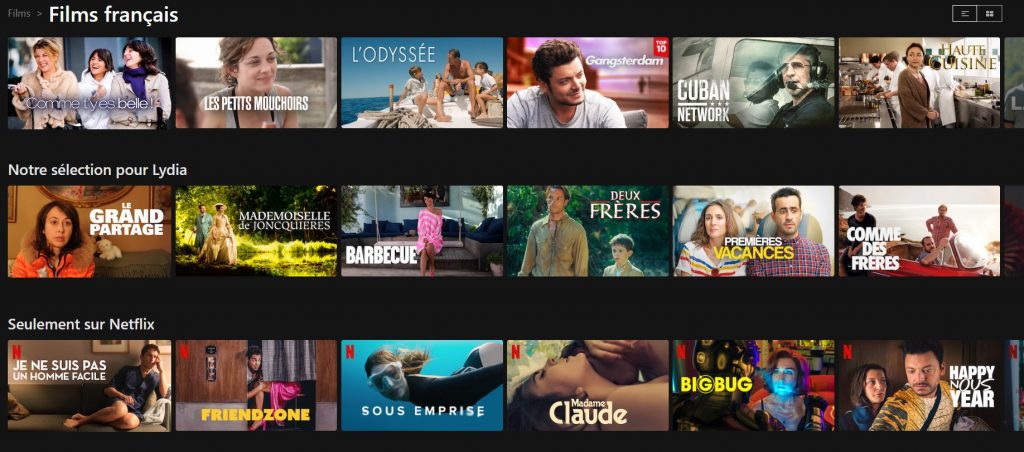
Netflix in French
Pick a French film or series and watch it. In French. With French subtitles. You won’t understand everything at first. That’s the point. Full immersion works better than switching languages.
Instagram / Tiktok
Follow French creators. Artists, chefs, comedians. The more French you consume, the more natural it becomes.
Comedy
Paul Taylor, a bilingual comedian in Paris, plays with both languages in his shows. Watching comedy in French is one of the best ways to understand nuance and humour.
So how long does it take to learn French? Longer than you think and less than you fear. You will feel like a beginner for a while. You will misunderstand things. You will search for words. But if you show up consistently and speak, even badly at first, progress happens quietly in the background. Fluency is not a finish line. It is an ongoing journey of discovery.
The Official CEFR Language Levels
The Common European Framework of Reference for Languages (CEFR) created these internationally recognised language levels that can be used to identify your fluency in a language. If you take a French language course be sure that you receive a valid CEFR certificate upon completion.
| CEFR Reference | Level Names |
| A1 | Beginner |
| A2 | Elementary |
| B1 | Intermediate |
| B2 | Upper Intermediate |
| C1 | Advanced |
| C2 | Proficient |