
The towns of Saint Malo and Dinard sit on either side of the Rance. A river that shapes the lives of those that live along its banks. Beginning as a vast tidal estuary before flowing all the way into Rennes as a calm pleasant canal. I didn’t know what to expect when I first passed Pont Saint-Hubert, perched on the banks of the Rance. A goat tied to a bollard of the bridge was not quite the first thing that came to mind.
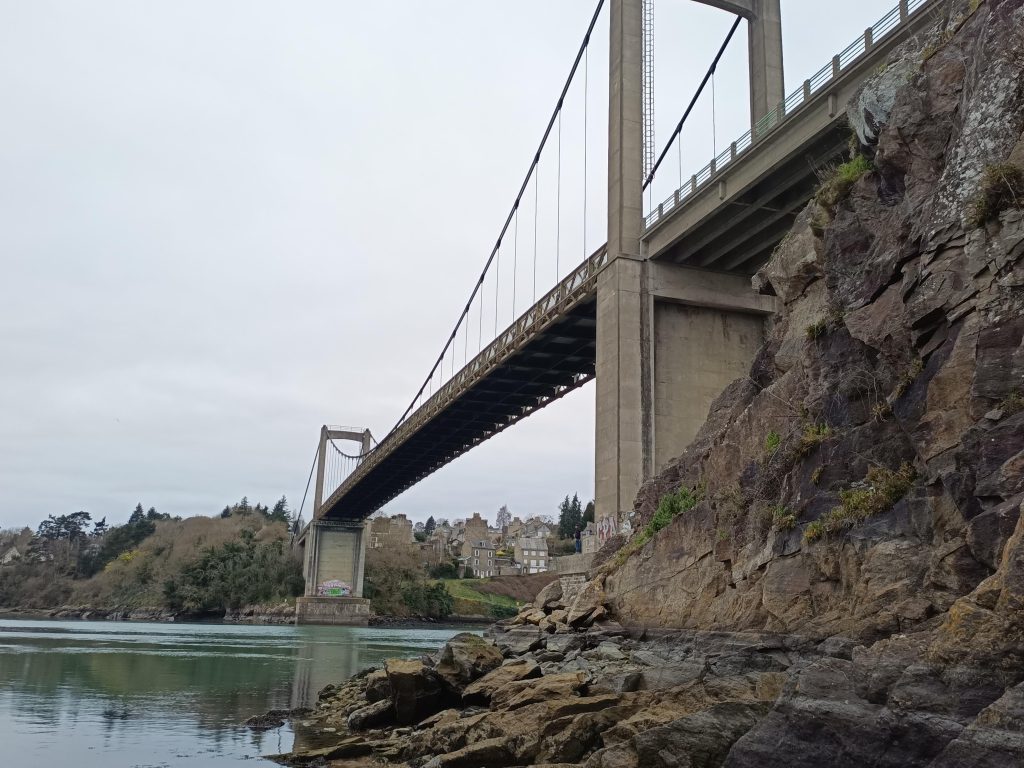
This over 70-year-old suspension bridge sits in the shadow of a larger, more modern bridge. It runs parallel and carries the traffic along the Route Nationale 176. But the river bends sharply here, meaning even a short distance from the old bridge the traffic noise disappears. This charming crossing was originally built in 1928 and was much needed by the local people. Before the completion of the bridge the only other way of crossing the river this far north was by ferry from Saint Servan, 16km away.
It takes its name from the small port beneath it. An ancient fishing port below the town of Ville-és-Nonais. In the past, many of the villagers would gather bait from the river and sell it to fisherman at the Sunday market. Today, fishermen still frequent it. Including my fiancé who is often after conger eel. It is a beautiful part of the Rance and very quiet and picturesque. A picnic bench by the port is the perfect place to watch the sun sink on a summer evening.
Destruction During WWII
During WWII the bridge was destroyed by the Allies to prevent the Germans from delivering supplies to the Norman front. Only the two pillars remained. Staring at each other. A reminder of the missing bridge for 13 years until a replacement could be built. The rest of the bridge fell into the river below and was never recovered.
In fact, the debris resting on the riverbed is one reason fishermen come here looking for conger eel. These eels lie deep on the riverbed, and the remains of the old bridge have become their playground. You’ve heard of eels living in shipwrecks, but these eels live in WWII rubble. I’m sure many a fisherman has snapped a line after being caught on some of this debris.
Guardian of Saint Hubert
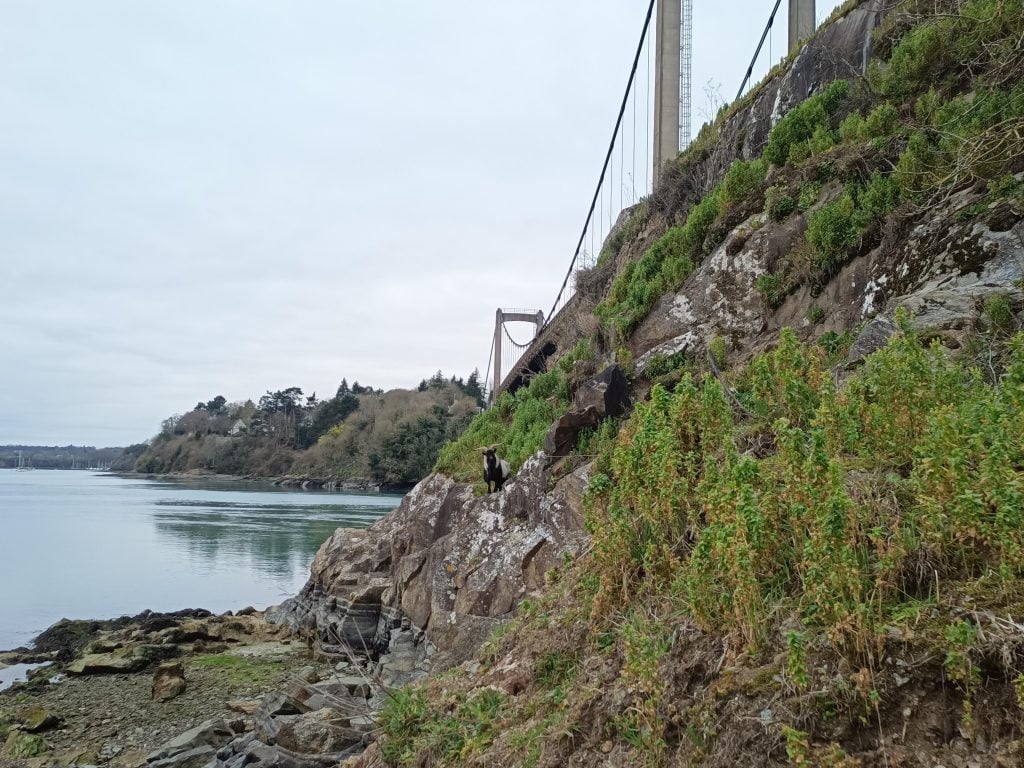
If you decide to visit, I should warn you, it is guarded by an unlikely protector. A particularly grumpy goat. This goat is a breed native to Brittany known as a chèvre des fossés. This translates to goat of the ditches. You won’t find him in a ditch but on the rocky banks of the Rance, guarding the path that leads down to the port. If you’re visiting, like I did, you might have to stand your ground against a goat that wants to charge. Fear not, I simply charged first and that did the trick.
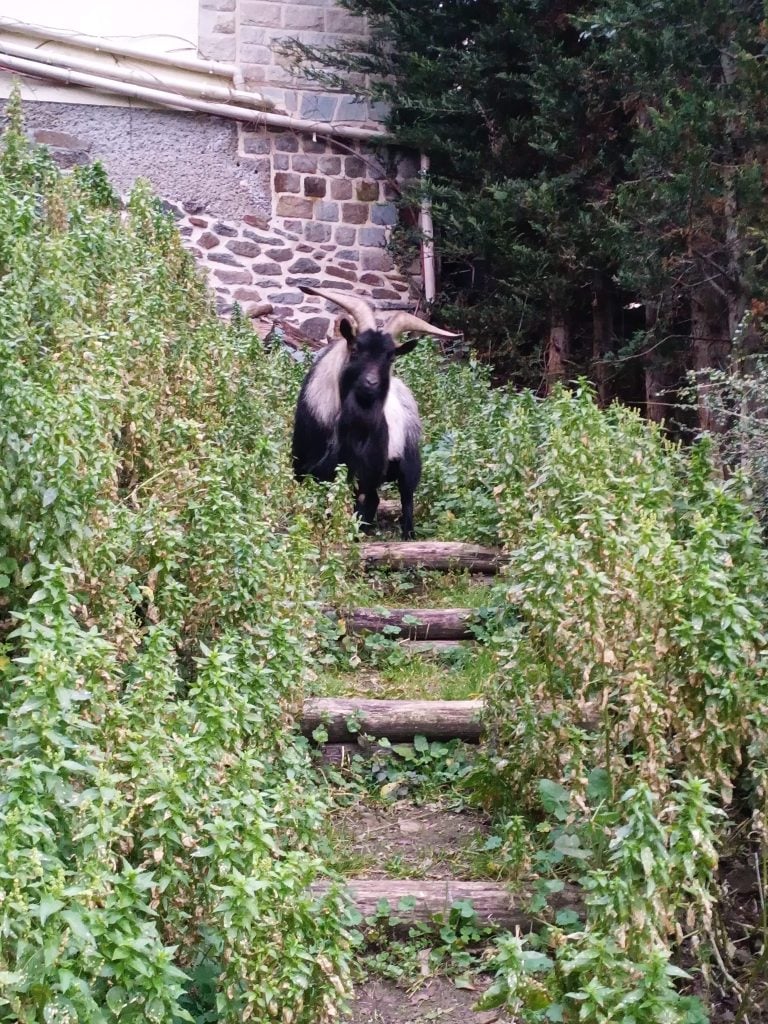
Once kept by the poorest families in the region, providing milk, meat, leather and labour. These goats are so named because they were used for clearing banks and ditches. They were also known as “cows of the poor”. Rediscovered in 2005, they had virtually vanished from the record during the 19th and 20th centuries. Today, efforts are underway to revive the breed, and its cheese.
So although the goat of Saint-Hubert may be unfriendly, he is part and parcel of the story here. A bridge resurrected. A breed rediscovered. Both once essential to the people of the Rance, both nearly lost to progress.
But this is not a sad place. It is a small glimpse into the layers of local history. A reminder that even the smallest crossings can carry more than we expect.