
Visitors arrive for many reasons: the corsair past of the city, it’s Second World War history or simply the beauty of its granite ramparts rising above the Channel. Some may even have been drawn here by Anthony Doerr’s All the Light We Cannot See.
This guide provides a simple way to explore Saint-Malo on foot, with a suggested walking route, must-see sights, and a selection of cafés, bars and restaurants along the way.
To learn more about the town’s history, take a look at the article On Saint-Malo, which explores the city’s corsair past and wartime story.
Suggested walking route
This route links Saint-Malo’s main highlights, beaches and historic neighbourhoods in one easy coastal walk.
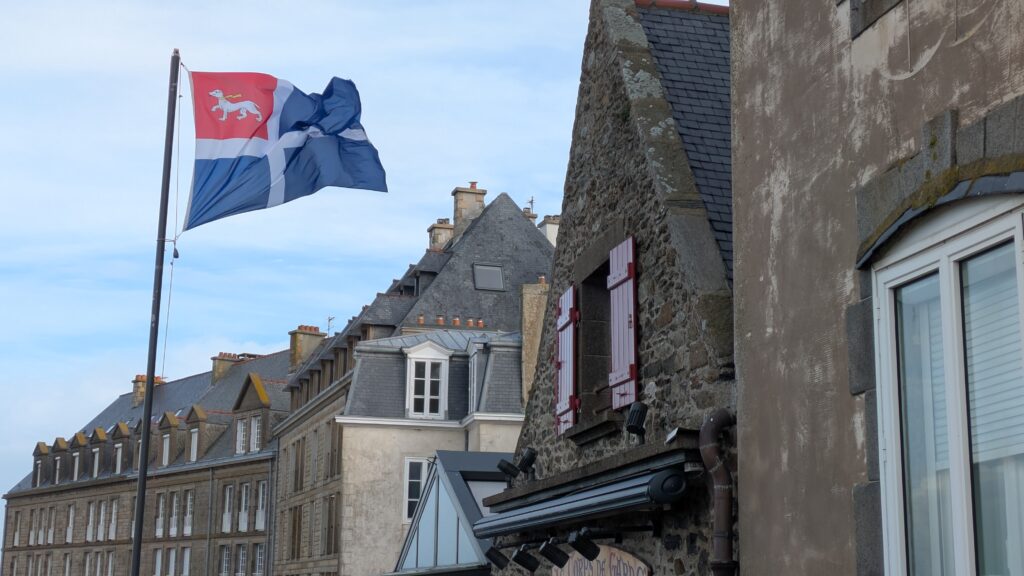
Must-See Places
- Sillon Beach – A sweeping three-kilometre beach stretching along the edge of Saint-Malo, famous for its dramatic tides and views back toward the walled city.
- Fort National – A Vauban fortress built on a tidal island just off the ramparts. At low tide you can walk across the sand to explore it.
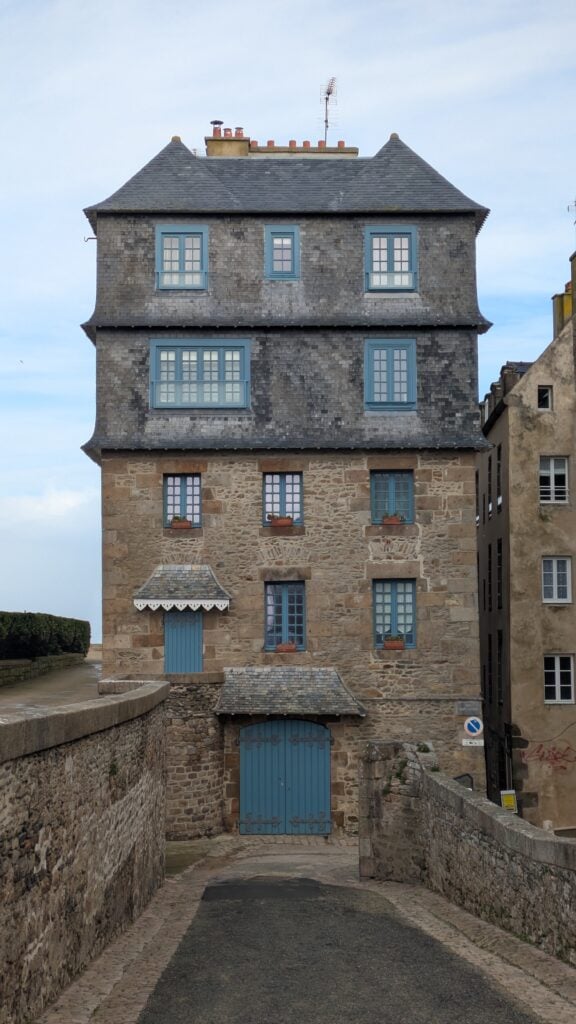
- The Ramparts of Saint-Malo – The granite walls surrounding the old town are the city’s defining feature. Walking the full circuit offers some of the best views in Saint-Malo.
- Saint-Vincent Cathedral – Part of the iconic St-Malo skyline and lovingly rebuilt post-war, this cathedral is a mix of romanesque and gothic styles and offers a moment of quiet reflection in the city walls.
- St Malo’s Tidal Pool – A historic sea pool with diving board and views toward Grand Bé island. Perfect for a dip when the tide is out.
- Bas Sablons Beach – A quieter beach in Saint-Servan overlooking the marina.
- Memorial 39-45 – A museum inside a German bunker on the Cité d’Aleth headland explaining Saint-Malo’s wartime history.
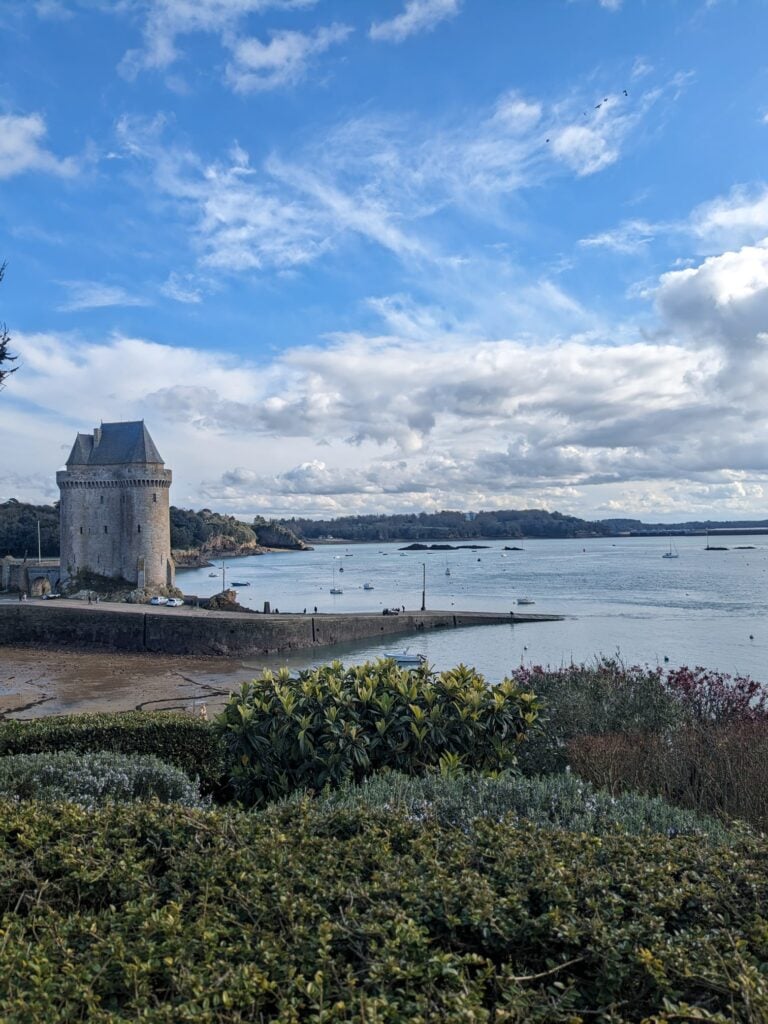
- Solidor Tower – A museum inside a German bunker on the Cité d’Aleth headland explaining Saint-Malo’s wartime history.
Bars & Cafés
France is often best experienced sitting on a terrace with a coffee or a glass of wine in hand watching the world pass you by. Here are a few favourite spots along the route.
Bars
- La Belle Epoque – A lively spot in the walled city. Popular with locals and visitors alike. The floor is coated with sand in the summertime – a beach within the walls.
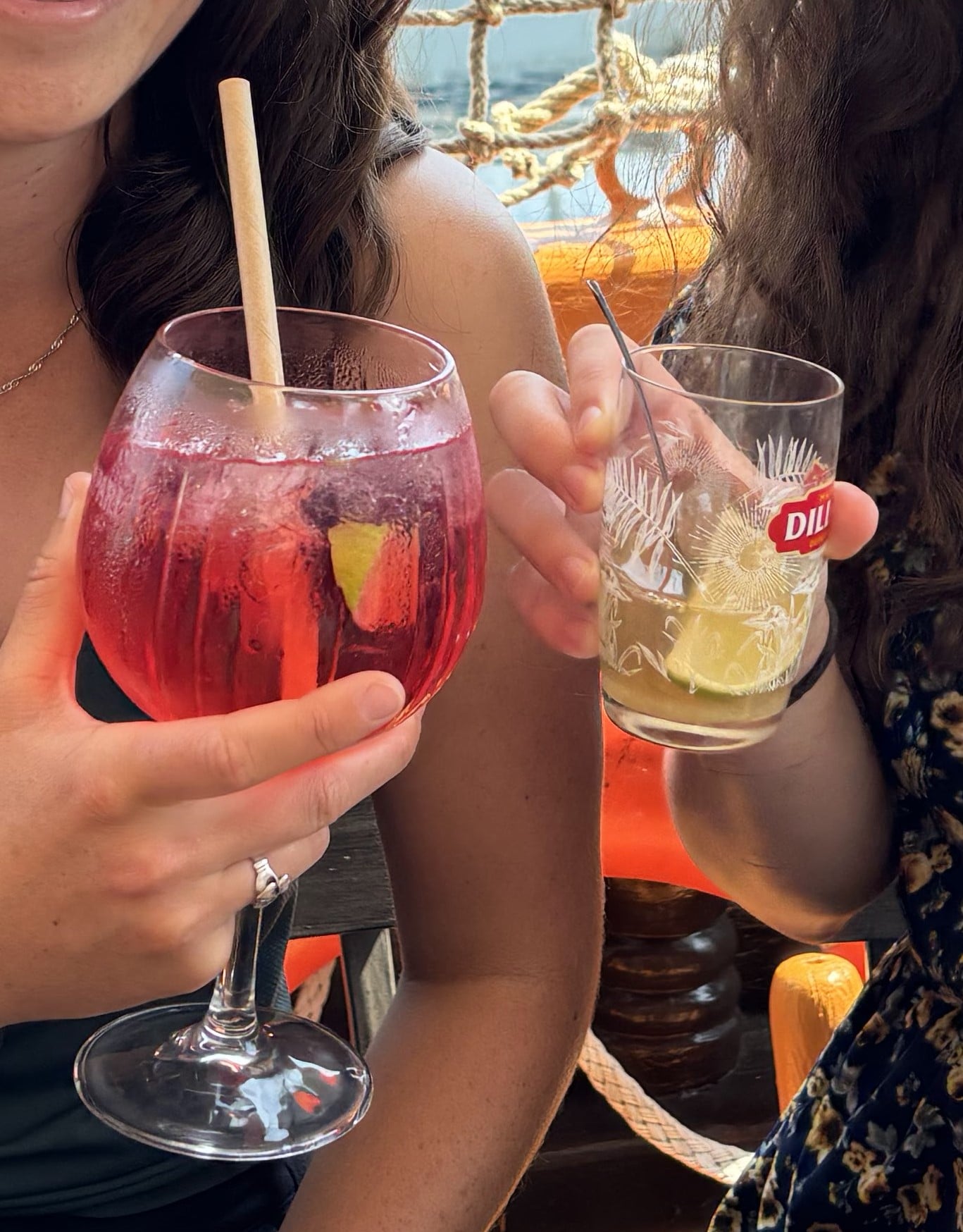
- Les Filles d’Aleth – A lovely spot on the Bas Sablons beach with a terrace in the sunshine and a cozy interior. Grab a local beer or try a local Saint-Malo Spritz here.
- Le Cancalais – A true local favourite thanks to it’s views across the estuary, hardworking team and the perfect place to watch the sun go down.
- La Caravelle – Your walk to the end of the Sillon beach is rewarded here with views of one of the most beautiful beaches in France. Watch with a glass in hand as the tide shifts dramatically up and down.
Cafés
- Miggy’s Coffee – Leaving or Arriving via the station? Wait for your train across the road at Miggy’s for a great cappuccino.
- Cavoua Coffee – Nestled in the heart of the walled city look no further for your coffee fix than this charming and homey spot.
- Mignon Café – A true local spot in the middle of the neighbourhood of Saint-Servan.
- Grain de Délice – Not on the walking route but a great coffee spot if you are staying in the quieter Paramé and want to escape the masses in the high season.
Restaurants
Saint-Malo is known for seafood and Breton crêperies. Here is a selection of some local favourites.
- Le Sillon – High quality seafood with seaside views. This classy establishment takes pride of place on the beach and delivers excellent quality and service to boot.
- Le Tourne Pierre – You cannot come to Brittany without visiting a crêperie. The galettes and crêpes here will not disappoint, and the friendly staff ensure a welcoming local experience. With so many crêperies to choose from this one is a sure favourite.
- Café Frui’thé – A cute brunch spot with tasty locally sourced options so suit everyone. With a bright and beautifully decorated interior – definitely worth a stop.
- Les Mélèzes – If you want to try going shoulder-to-shoulder with the locals this is as local as it gets. The menu is simple. Grilled meat or fish. No nonsense delicious food. And you’ll have to practise your french here.
- Le Barapizza – Did you know the French eat more pizza than any other country? If you have to grab a bite to eat before catching your train this is a great local spot. It is more a bar than a restaurant as the name suggests. The owners are very welcoming and the pizza is good.
If You Have More Time
Grand Bé Island
At low tide you can walk across the sand to Grand Bé, where the writer Chateaubriand is buried.
Paramé
A quieter neighbourhood along Sillon Beach with cafés and local shops away from the crowds.
Musée des Terre-Neuvas
A small museum in Rocabéy telling the story of the Breton fishermen who crossed the Atlantic to fish the cod banks of Newfoundland.
Download a mobile-friendly walking map of Saint-Malo with the full route, cafés and restaurants.