
Have you ever been in a foreign country and quickly whipped out your phone for a translation? Maybe you’ve even spoken into your phone and put it on loudspeaker to do the talking for you. Like the search engine, the translate feature is automatic and takes your input literally. Word for word. For better translations of phrases, I recommend DeepL – they even have a Pro version for translating entire documents or switching between formal and informal language.
But that word for word literal translation can get you in trouble if you’re not careful. I learnt that the hard way at the beginning of 2020.
During the first Covid confinement in France, I developed a yeast infection – an unfortunate but common consequence of long baths, tight leggings and too much time indoors.
It was pretty uncomfortable, and I had to do something about it, so I ventured out of our little house in the middle of the Brittany countryside into the shuttered world. The nearest pharmacy was in Plénée-Jugon, a small town barely ten minutes down the road. It felt absurdly exciting to have a legitimate reason to leave the house.
Explaining my predicament in another language, while socially distancing, felt like a challenge I was not prepared for. Covid had really put a halt to the language learning process and I had only been in France for a few months at this point.
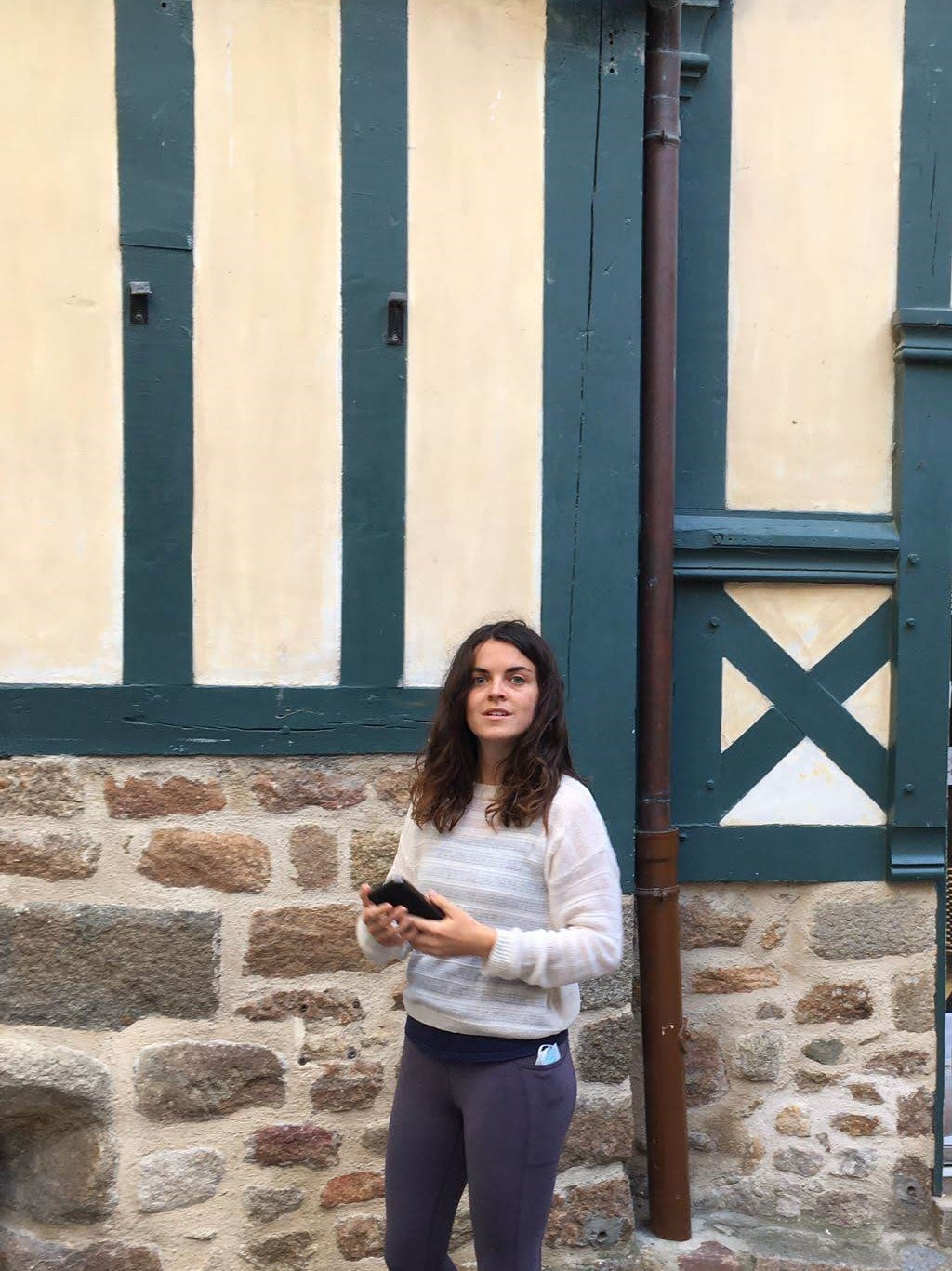
Because of Covid you weren’t allowed to go into the pharmacy so there was a long, socially distanced queue that had formed outside it. While I waited, I did a quick google translate for thrush. Google offered two options: la grive and muguet. Neither meant anything to me.
I didn’t really know what the difference was, but I figured I would try both and hopefully she spoke a little English.
Turns out she didn’t speak any English. As soon as it was my turn, I panicked. Weeks of confinement had done nothing for my confidence and the silent queue behind me didn’t help. I started with,
“Désole. Je suis anglaise. Parlez-vous anglais?”
“Sorry. I’m English. Do you speak English?”
Nope. No English. I was going to have to speak French. It was incredibly embarrassing, but I tried out my google translate words. She blinked at me, confused. I pointed to my crotch and tried each word again. She was lost. I could see she wanted to help me and asked if it was something to do with my face.
“Votre visage?”
Then I suddenly came to my senses and remembered to say infection and continued to gesture to my groin, the eyes of the people in the queue burning into the back of my head. I was sweating.
Thankfully she seemed to understand and went inside to get some medicine. She came back with a few options and slowly talked me through them. I understood enough of what she said to know this was what I needed and I said I would take it all. I wasn’t about to risk repeating this performance if the first treatment failed.
When I got home, I did some proper googling. It turns out la grive is a bird. And muguet is lily of the valley. I had essentially walked into a pharmacy, pointed at my crotch and said “sparrow.”
And that is why Google Translate is rarely the solution.
Living in another language means surrendering a certain dignity. Technology helps – until it doesn’t. And sometimes, standing in a small Breton town mispronouncing “sparrow” while gesturing wildly is simply part of the education.