While France is romanticised as a country where you can sip the finest wines and nibble on a beautiful array of pungent cheeses, Brittany is a little different. Spend enough time here and you’ll hear locals say you are no longer in France at all, but in Brittany. While France is romanticised as a land of vineyards and pungent cheeses, Brittany is different. Here, identity runs deeper than cliché and the drinks and dairy reflect that.
Cider, Not Wine
Rather than raising a glass of dry Sancerre in the Loire Valley or a full bodied earthy Châteauneuf-du-pape in Rhône region, in Brittany we drink Cider. A perfect climate for apple orchards, you will find apples growing all over this region.
Brittany’s climate is perfect for apple orchards, and cider – not wine – fills the glasses here. From the Cornouaille cider route in Finistère to small producers along the Rance, apples define the landscape as much as tides do.
Breton cider is rustic and bold, ranging from straw-yellow and crisp to cloudy and earthy. Orchards here use a certain variety of apple trees in order to produce the unique flavour. Combinations of acidic, bittersweet, and sharp sour varieties. And while that might sound like it produces a harsh and sour drink, it is really very good.
How to drink cider.
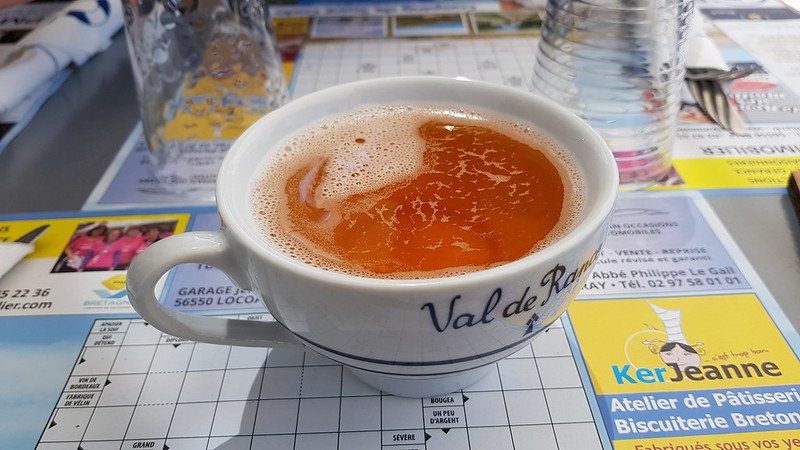
Order a ‘cidre doux’ if you prefer a lighter, sweeter taste or a cidre brut for a drier, fuller flavour.
It is traditionally served in a bolée in Brittany. A ceramic cup. In the countryside where cider was drawn in a bucket, everyone would bring their bolée and help themselves to a cup. The expression “boire une bolée” or “drink a bowl” was common in Gallo speaking areas.
Order cider from any bar and drink it alongside your galette at a creperie.
Butter Before Cheese
Brittany is not a region of cheese. It is a region of butter. Salted, golden, unapologetic butter.
I would argue that Brittany has the best butter in the world. Sorry, Ireland’s Kerrygold but Brittany does it better.
This is thanks in large part to salt. As a rugged peninsula edged by the Atlantic, Brittany has long been blessed with natural salt marshes. The most famous lie at Guérande, just beyond today’s regional border where salt has been harvested since Roman times.
While unsalted (doux) butter exists, most Breton households reach instinctively for demi-sel: lightly salted, deeply flavourful, and spread generously on everything from crusty baguettes to warm galettes.
Bordier – Butter As A Craft
While it is a hotly debated topic, time and again Le Beurre Bordier comes out on top as the worlds best butter. And I can tell you from experience it really is incredible.
The milk is so fresh that the colour of Bordier butters changes depending on the season. In the summer it is bright yellow because the cows are grazing on fresh grass and wildflowers. In the winter is it pale almost white because the cows are eating dried grasses. Of course, this also changes the flavour – summer butter is more savoury and winter butter is sweeter.
Jean-Yves Bordier is so passionate about butter that at his shop in Saint Malo you can try all sorts of butters infused with different flavours. Used by chefs around the world and invented by Jean-Yves himself is Bordier seaweed butter – harvested from the Brittany coastline. Here he is describing his butter beautifully:
So the next time someone tells you France is all about wine and cheese, take them to Brittany. Pour them a bolée of cidre, spread them some demi-sel butter on fresh bread and share a round or two of Breton cheeses. They might be surprised how deliciously different a region with “no wine and cheese” can taste.